
What is a Grader System?
Learn How Grader Systems Create Smooth and Accurate Surfaces
A grader system is one of the most important machine systems used in road construction, site preparation, mining, and civil engineering. It is designed to level the ground, create precise slopes, and produce smooth surfaces for construction projects.
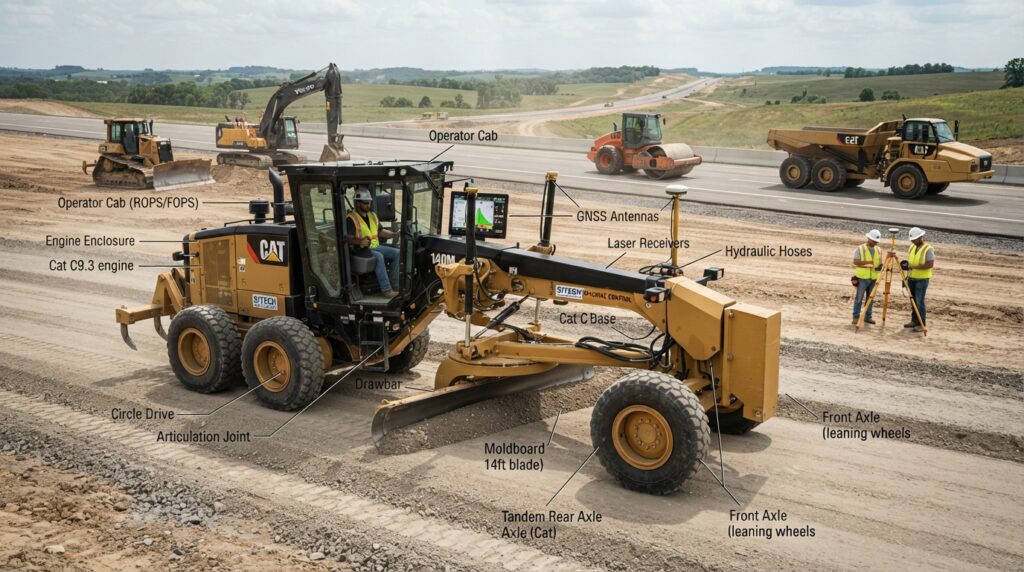
What is a Grader System?
A Grader System is the complete operating system of a motor grader. It includes the engine, hydraulic system, transmission, frame, moldboard, steering system, electrical system, and machine control technology that work together to shape and level the ground.
The grader is best known for its long adjustable blade, called the moldboard, which cuts, spreads, and levels soil or gravel with high accuracy.
Modern graders are also equipped with GPS, GNSS, laser guidance, and 3D machine control systems, allowing operators to achieve precise grades without repeated manual measurements.
Why is a Grader System Important?
A smooth and level surface is essential before roads, railways, airports, or building foundations can be constructed.
The grader system helps engineers create accurate elevations, proper drainage slopes, and finished surfaces that meet design specifications. It improves productivity, reduces material waste, and minimizes the need for rework.
Because of its precision, the grader is often the final machine used before paving begins.
How Does a Grader System Work?
The engine supplies power to the machine and drives the hydraulic system.
The hydraulic system controls the movement of the moldboard, allowing it to raise, lower, rotate, tilt, and slide sideways. The operator uses joysticks inside the cab to adjust the blade according to the required grade.
On modern graders, machine control systems continuously compare the blade position with the digital design model and automatically guide the blade to the correct elevation.
Main Components of a Grader System
A grader system normally includes:
- Operator Cab
- Diesel Engine
- Transmission
- Hydraulic Pumps
- Hydraulic Cylinders
- Moldboard (Blade)
- Circle Drive
- Drawbar
- Front Axle
- Rear Tandem Axle
- Articulation Joint
- Steering System
- Hydraulic Hoses
- Electrical System
- GNSS Receiver
- Laser Receiver
- 3D Machine Control System
- Touchscreen Display
Each component plays an important role in producing accurate grading results.
Where is a Grader System Used?
Grader systems are widely used in:
- Road Construction
- Highway Projects
- Airport Runways
- Railway Construction
- Building Site Preparation
- Mining Operations
- Quarry Roads
- Industrial Developments
- Land Reclamation
- Large Infrastructure Projects
Advantages of a Grader System
A grader system provides high grading accuracy, smooth surface finishing, improved productivity, better material distribution, reduced fuel consumption, and faster project completion. Modern machine control systems also improve precision while reducing the need for repeated survey checks.
Who Uses Grader Systems?
Grader systems are commonly used by civil engineers, road contractors, construction companies, mining companies, survey engineers, grading contractors, equipment operators, and government infrastructure agencies.
Conclusion
The grader system is one of the most important machine systems used in modern construction and road engineering. Its ability to create smooth, accurate, and properly graded surfaces makes it essential for highways, airports, railways, mining sites, and infrastructure projects. Understanding how a grader system works helps engineers and operators improve productivity, quality, and construction accuracy.