
How to Operate a Trailing Suction Hopper Dredger
Operate a Trailing Suction Hopper Dredger Safely and Efficiently
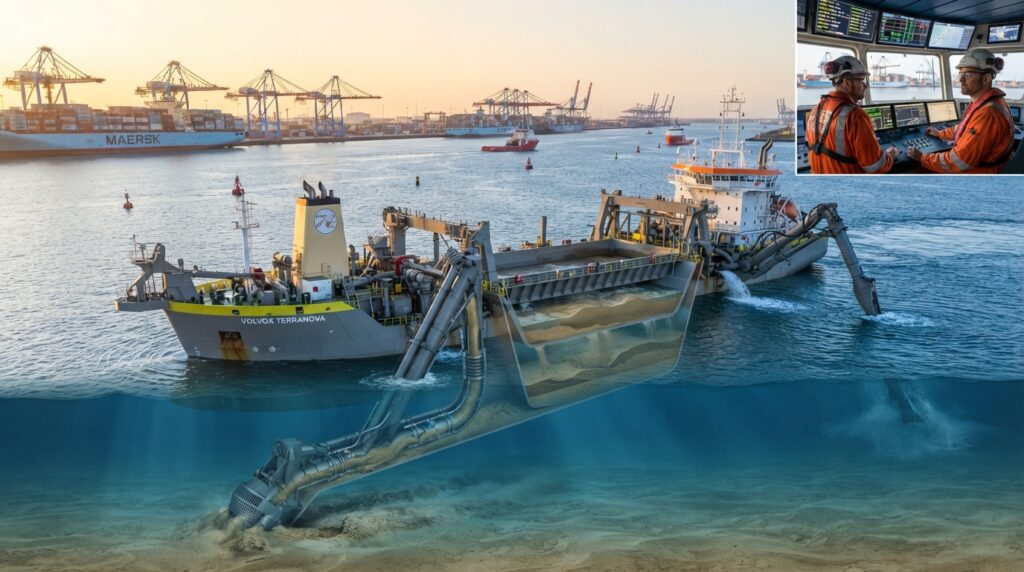
A Trailing Suction Hopper Dredger must be operated correctly to achieve safe, efficient, and productive dredging. This guide explains the complete dredging process in simple language.
Introduction
Before starting a dredging project, the Trailing Suction Hopper Dredger should be inspected, navigation systems should be checked, and the dredging route should be confirmed.
The drag arms, dredge pumps, hopper, overflow system, and monitoring software should all be tested before dredging begins.
A proper setup improves production, reduces equipment wear, and helps achieve the required dredging depth.
Equipment Required
Before starting the operation, prepare the following equipment:
- Trailing Suction Hopper Dredger
- Drag Arms
- Drag Heads
- Dredge Pumps
- Hopper
- Overflow System
- Bottom Doors
- Bow Coupling
- Jet Water Pumps
- GNSS Positioning System
- Dredging Control Software
- Navigation System
- Flow Meter
- Density Meter
- Draft Sensors
Step 1 – Inspect the Dredger
Inspect the drag arms, drag heads, dredge pumps, engines, hydraulic systems, hopper doors, overflow shafts, navigation equipment, and electrical systems.
Check for leaks, damaged hoses, worn drag head teeth, or loose connections.
Repair any faults before starting work.
Step 2 – Navigate to the Dredging Area
Sail the dredger to the planned dredging location.
Verify the dredging route using GNSS positioning and electronic navigation charts.
Confirm that the vessel is correctly aligned with the planned dredging line.
Step 3 – Lower the Drag Arms
Slowly lower one or both drag arms until the drag heads rest gently on the seabed.
Adjust the drag arm depth according to the required dredging level.
Avoid excessive pressure that could damage the drag heads or disturb the seabed unnecessarily.
Step 4 – Start the Dredge Pumps
Start the dredge pumps and begin drawing a mixture of water and seabed material through the drag arms.
The slurry is transported into the hopper.
Monitor pump pressure and slurry density throughout the operation.
Step 5 – Monitor Hopper Loading
As dredging continues, the hopper gradually fills with sand or sediment.
The overflow system allows excess water to leave the hopper while keeping the dredged material inside.
Monitor:
- Hopper Capacity
- Slurry Density
- Overflow Condition
- Pump Performance
- Vessel Draft
Stop loading when the hopper reaches the planned capacity.
Step 6 – Raise the Drag Arms
Lift the drag arms carefully from the seabed.
Inspect system readings and confirm that the drag heads are fully clear of the seabed before increasing vessel speed.
Step 7 – Sail to the Disposal Area
Navigate safely to the designated disposal or reclamation area.
Continue monitoring:
- Vessel Speed
- Hopper Load
- GNSS Position
- Engine Performance
- Weather Conditions
Step 8 – Discharge the Material
Depending on the project, the dredged material can be discharged by:
- Opening the Bottom Doors
- Pumping through a Bow Connection
- Pumping through Floating Pipelines
Select the unloading method according to the project requirements.
Step 9 – Return to the Dredging Area
After unloading, close the bottom doors if used.
Inspect the drag arms and pumps.
Return to the dredging area and repeat the dredging cycle until the required production is achieved.
Common Mistakes to Avoid
- Lowering the drag heads too quickly.
- Overfilling the hopper.
- Ignoring overflow losses.
- Operating with worn drag head teeth.
- Not monitoring slurry density.
- Failing to inspect bottom doors before unloading.
Best Practices
Inspect drag heads regularly.
Monitor hopper loading continuously.
Maintain the correct dredging speed.
Record production data after every cycle.
Follow the approved dredging plan.
Carry out routine maintenance on pumps and hydraulic systems.
Safety Tips
Always wear personal protective equipment (PPE).
Maintain communication between the bridge and engine room.
Keep personnel away from moving drag arms.
Monitor weather and sea conditions continuously.
Follow emergency shutdown procedures whenever required.
Conclusion
A Trailing Suction Hopper Dredger operates efficiently when its drag arms, pumps, hopper, and navigation systems are correctly managed. Careful monitoring of hopper loading, overflow, and unloading helps improve production while maintaining safe dredging operations.