
How to Operate a Cutter Suction
Dredger Operate a Cutter Suction Dredger Safely and Efficiently
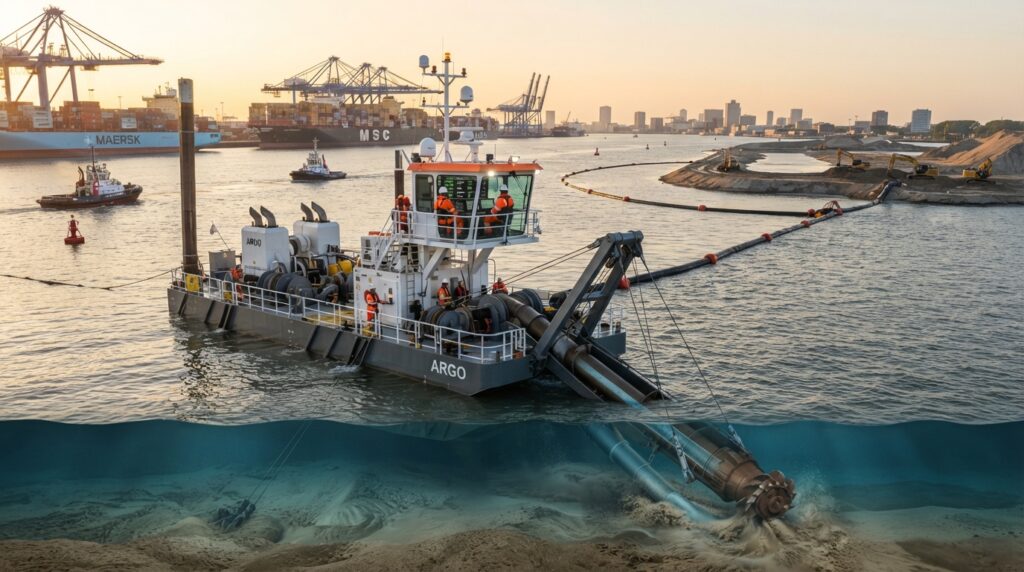
A Cutter Suction Dredger must be positioned correctly, operated carefully, and monitored continuously to achieve safe and efficient dredging. This guide explains the complete dredging process in simple language.
Introduction
Before dredging begins, the Cutter Suction Dredger must be inspected, positioned at the work area, and connected to the discharge pipeline.
The cutter head, dredge pump, hydraulic system, positioning system, and monitoring software should all be checked before starting work.
A proper setup improves production, reduces equipment wear, and keeps the dredging operation safe.
Equipment Required
Before starting the operation, prepare the following equipment:
- Cutter Suction Dredger
- Rotating Cutter Head
- Dredge Pump
- Suction Pipe
- Floating Discharge Pipeline
- Land Pipeline
- Spud System
- Swing Winches
- Swing Wires
- Hydraulic Power Unit
- Diesel Engines
- Generator
- GNSS Positioning System
- Dredging Software
- Survey Vessel (if required)
- Hydrographic Survey Equipment
Step 1 – Inspect the Dredger
Inspect the cutter head, suction pipe, dredge pump, hydraulic hoses, engines, winches, spuds, discharge pipeline, and electrical systems.
Check for oil leaks, damaged hoses, loose bolts, or worn cutter teeth.
Repair any problems before starting work.
Step 2 – Position the Dredger
Move the dredger to the planned dredging location using tugboats or its own propulsion system if available.
Lower the main spud into the seabed to hold the dredger in position.
Connect the swing wires to the anchors placed on both sides of the dredging area.
Verify the dredger’s position using the GNSS system.
Step 3 – Connect the Discharge Pipeline
Connect the floating pipeline to the dredger.
If the dredged material will be pumped onto land, connect the floating pipeline to the land pipeline.
Inspect every connection to prevent slurry leakage.
Step 4 – Start the Engines and Hydraulic System
Start the diesel engines and hydraulic power unit.
Allow all systems to reach normal operating temperature.
Check hydraulic pressure, engine temperature, fuel level, and lubrication before starting the cutter.
Step 5 – Start the Cutter Head
Lower the cutter head slowly until it reaches the seabed.
Start the cutter rotation at the recommended speed.
Allow the cutter to loosen the seabed material gradually without overloading the system.
Step 6 – Start the Dredge Pump
After the cutter head begins cutting the seabed, start the dredge pump.
The pump will mix water with the loosened material to create slurry.
The slurry is transported through the discharge pipeline to the disposal or reclamation area.
Monitor pump pressure and slurry flow continuously.
Step 7 – Begin the Swing Pattern
Use the swing winches to move the dredger slowly from left to right.
Each swing removes a layer of seabed material.
After completing one swing, move the dredger forward using the spud carriage and repeat the process.
Continue until the required dredging depth is achieved.
Step 8 – Monitor the Dredging Operation
Continuously monitor:
- Cutter Speed
- Pump Pressure
- Slurry Density
- Production Rate
- Engine Temperature
- Fuel Consumption
- GNSS Position
- Dredging Depth
- Pipeline Pressure
Adjust the operation if any value moves outside the recommended range.
Step 9 – Stop the Operation
After reaching the required dredging depth, stop the cutter head first.
Continue pumping clean water through the pipeline to remove remaining slurry.
Shut down the dredge pump and engines safely.
Inspect the equipment before leaving the work site.
Common Mistakes to Avoid
- Starting the pump before the cutter reaches the seabed.
- Operating with worn cutter teeth.
- Ignoring high pump pressure.
- Swinging the dredger too quickly.
- Not checking GNSS positioning regularly.
- Failing to flush the pipeline after dredging.
Best Practices
Inspect the cutter head every day.
Monitor production continuously.
Keep the discharge pipeline free from blockages.
Perform regular maintenance on pumps and hydraulic systems.
Follow the dredging plan and design depth.
Record daily production and equipment performance.
Safety Tips
Always wear personal protective equipment (PPE).
Keep all workers away from moving winches and swing wires.
Monitor weather and sea conditions before starting work.
Follow emergency shutdown procedures if equipment fails.
Maintain communication between the dredger and support vessels at all times.
Conclusion
A Cutter Suction Dredger operates efficiently when it is properly positioned, maintained, and monitored. Careful control of the cutter head, dredge pump, and swing pattern helps achieve the required dredging depth while improving safety and productivity.