
How Does an Excavator System Work?
Understand the Complete Working Process of an Excavator System
An excavator system uses hydraulic power, mechanical components, and intelligent controls to perform digging, lifting, loading, and grading operations. This guide explains the complete working process in simple language.
Introduction
An excavator performs heavy work by converting engine power into hydraulic power.
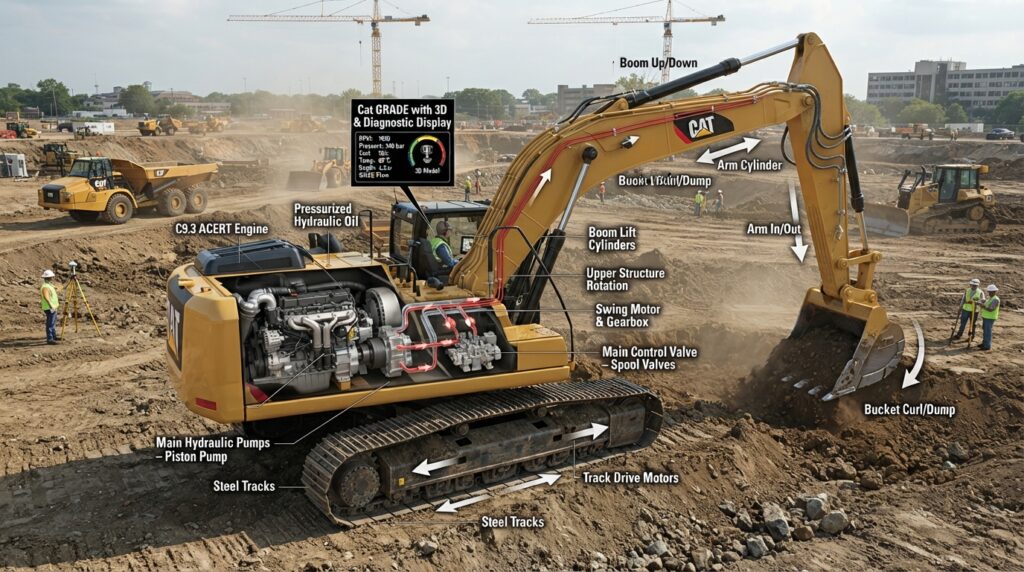
The engine drives hydraulic pumps that create high-pressure oil flow. This hydraulic pressure moves different parts of the machine, allowing the excavator to dig, lift, swing, travel, and operate various attachments.
Every movement is controlled by the operator using joysticks inside the cab, while onboard computers and sensors continuously monitor the machine’s performance.
Step 1 – Start the Machine
Before starting work, inspect the excavator carefully.
Check the engine oil, hydraulic oil, coolant, fuel level, tracks or tyres, hydraulic hoses, bucket, boom, and arm.
After the inspection, start the engine and allow it to idle for a few minutes so that the hydraulic oil reaches its normal operating temperature.
Step 2 – Hydraulic Pumps Generate Pressure
Once the engine is running, it drives the hydraulic pumps.
The hydraulic pumps draw oil from the hydraulic tank and send it through the main control valve under high pressure.
This hydraulic pressure becomes the main source of power for every excavator movement.
Step 3 – Operator Controls the Machine
The operator uses two joysticks and travel controls inside the cab.
These controls send commands to the hydraulic control valves.
The valves direct hydraulic oil to the required cylinders or hydraulic motors, allowing the excavator to move smoothly and accurately.
Step 4 – Boom, Arm and Bucket Move
Hydraulic cylinders extend or retract to move the boom, arm, and bucket.
The boom raises and lowers the working equipment.
The arm moves the bucket closer to or farther from the machine.
The bucket digs, lifts, carries, and dumps the material.
All movements can be combined for smooth and efficient operation.
Step 5 – Swing System Operates
The swing motor rotates the upper structure of the excavator.
This allows the operator to move material from the excavation area to a truck, stockpile, or another location without moving the entire machine.
Step 6 – Travel System Moves the Excavator
When the excavator needs to change its position, hydraulic travel motors drive the crawler tracks or wheels.
The operator can move forward, reverse, or turn the machine depending on the job requirements.
Step 7 – Monitor the Machine
During operation, the operator continuously checks the display screen.
The monitor provides important information such as:
- Engine Speed
- Fuel Level
- Hydraulic Pressure
- Engine Temperature
- Hydraulic Oil Temperature
- Battery Voltage
- Machine Hours
- Warning Messages
- Maintenance Alerts
- GNSS Position
- 3D Machine Control Information
Monitoring these values helps prevent breakdowns and improves machine performance.
Step 8 – Complete the Task
After the excavation or lifting work is complete, park the excavator on stable ground.
Lower the bucket safely to the surface.
Allow the engine to idle for a few minutes before shutting it down.
Inspect the machine and clean any dirt or debris from the undercarriage and working equipment.
Safety Guidelines
Always inspect the machine before starting work.
Wear personal protective equipment (PPE) at all times.
Keep people away from the excavator’s working area.
Never work beneath a suspended load.
Operate only on stable ground.
Follow the manufacturer’s operating instructions and maintenance schedule.
Best Practices
Carry out daily inspections before operation.
Keep hydraulic oil clean and at the correct level.
Use the correct attachment for each task.
Avoid sudden machine movements.
Monitor the machine display regularly.
Perform scheduled maintenance on time.
Conclusion
An excavator system works by combining engine power, hydraulic technology, mechanical components, and electronic controls. Every part of the system works together to perform excavation, lifting, loading, grading, and material handling safely and efficiently. Understanding this process helps operators, engineers, and students use the machine more effectively.